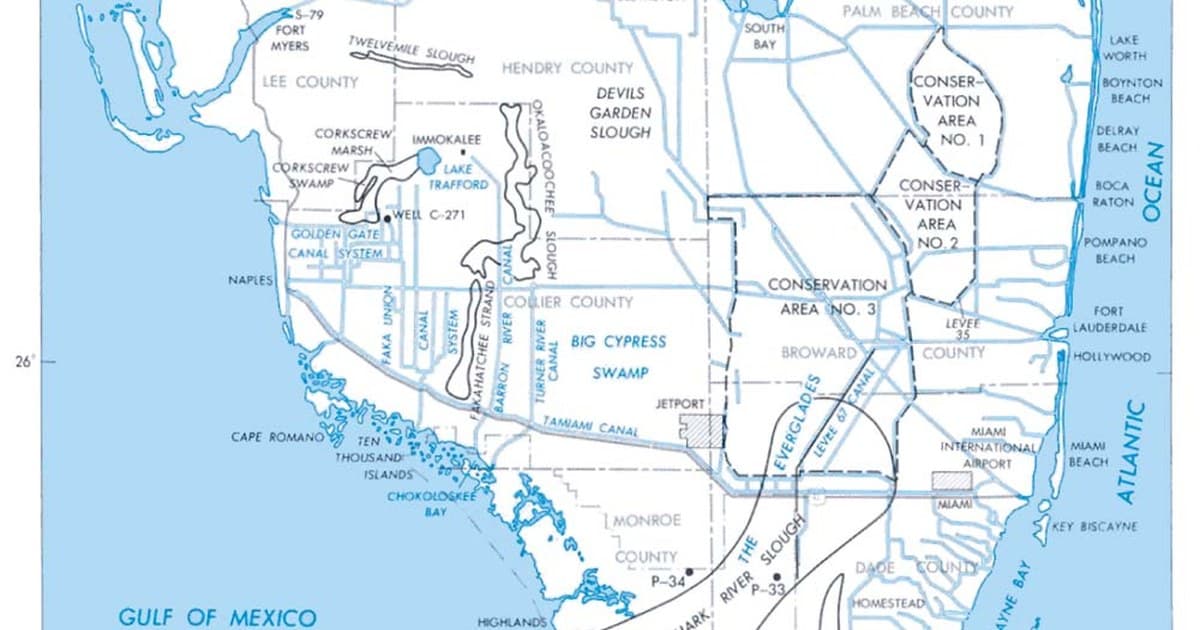
South Florida tap water carries a specific set of regional patterns that show up in almost every home we walk into. The Biscayne Aquifer recharges fast and shallow, hardness climbs steeply as you move west toward Lake Okeechobee, seasonal algal blooms shift the disinfection load, and PFAS, chloramine, and saltwater intrusion all sit beneath the surface of the average Consumer Confidence Report. Here is what we look for at every install, and what you can check yourself before you book a free test.
Curious what is actually in your tap?
Schedule a free in-home water test in South Florida
We bring a calibrated kit to your kitchen, walk you through your utility's CCR, and explain exactly what you are seeing in plain English. Servicio en español disponible.
The Biscayne Aquifer Sets the Whole Stage
Almost everything you taste, smell, or see in South Florida tap water traces back to the Biscayne Aquifer, a shallow, highly permeable limestone formation supplying most of Miami-Dade, Broward, and southeastern Palm Beach. It is one of the most productive aquifers in the US and one of the most exposed. Surface canals, septic drainfields, agricultural runoff, and stormwater reach it quickly because the water table sits only a few feet below grade in many neighborhoods.
Anything the utility does not filter, you see at the tap within days. Knowing the source is the foundation of every diagnostic we do, and the same logic informs our well water guidance for homes west of the Turnpike on the surficial system.
Hardness Climbs Sharply as You Move Inland
One of the first things we measure on any site visit is grains per gallon (gpg) at the kitchen sink. Coastal Broward and east Miami-Dade often test in the 8 to 12 gpg range, which the USGS hardness classification calls hard to very hard. Move west toward Wellington, Loxahatchee, or the western Palm Beach utilities and the same test routinely returns 16 gpg or higher. The reason is geology. The closer the wellfield draws from the carbonate-rich interior, the more calcium and magnesium dissolve into the supply.
That difference matters for equipment sizing. A 32,000-grain softener is fine for a four-person coastal home, but the same household in Wellington often needs a 48,000-grain unit to avoid weekly regenerations. Our South Florida water softener service sizes the resin bed to the real test result, not a national average. If you want to see expected numbers by zip code, the hard water by zip code guide breaks it down for the entire service area.
Lake Okeechobee Pushes Algal Blooms Into Inland Supply
Inland Palm Beach utilities and several agricultural-area systems either draw from or sit downstream of Lake Okeechobee. During warm months, the lake produces seasonal cyanobacterial blooms that can release microcystin and other cyanotoxins. The Florida Department of Environmental Protection tracks these events on its algal bloom monitoring page, and the South Florida Water Management District publishes near real-time conditions through its algae response program.
Utilities treat cyanotoxins with activated carbon, oxidation, and conventional filtration. When blooms intensify, plants raise chlorine dosing, which is why neighbors in Belle Glade, Pahokee, and western communities report stronger pool-water odors in summer. A whole-home filtration system with catalytic carbon smooths that swing out of every fixture.
Chlorine vs Chloramine Splits the Region in Two
South Florida utilities are not consistent about how they disinfect. Some use free chlorine, others use chloramine (a chlorine and ammonia blend) because it produces fewer disinfection byproducts in long distribution lines. Miami-Dade Water and Sewer Department, for example, uses chloramine for most of its retail customers, as noted in the Miami-Dade water quality reports. Other systems in Palm Beach and Broward run on chlorine. A few switch between the two seasonally.
The disinfectant determines what your filter has to do. Standard GAC removes chlorine well but struggles with chloramine, which needs catalytic carbon and longer contact time. If a refrigerator filter that worked elsewhere falls flat in your South Florida kitchen, chloramine is usually why. The reverse osmosis systems we install pair a catalytic carbon prefilter with the RO membrane for this reason.
How to Find Out Which Disinfectant Your Utility Uses
- Open your most recent Consumer Confidence Report. Every utility is required to publish one annually.
- Look for the disinfectant residual section. It will list either chlorine, chloramine, or both at the highest annual running average.
- If the report mentions ammonia at the plant, you are almost certainly on chloramine.
- Boca Raton, Boynton, Delray, and Palm Beach Gardens customers can start with the PBCWUD water quality page. Fort Lauderdale and Hollywood residents pull theirs from the Broward County water quality portal.
PFAS Detections Are Real, and the Rule Is Already in Force
In April 2024 the U.S. EPA finalized the first federal, legally-enforceable drinking water standard for PFAS, setting a Maximum Contaminant Level of 4 parts per trillion for PFOA and PFOS. Utilities have until 2029 to comply, but monitoring is already underway. The full rule and its supporting documents live on the EPA PFAS drinking water page. Several South Florida systems reported detections in their 2024 Consumer Confidence Reports, with concentrations varying by wellfield and season.
PFAS does not smell, taste, or color the water, which is why almost every homeowner is surprised when we explain it. The only reliable residential answer is a system carrying the NSF/ANSI 53 P473 or NSF/ANSI 58 P473 certification. For the regional walk-through, see the full PFAS in South Florida tap water guide. For installs specifically, the reverse osmosis service page covers what we put under the kitchen sink.
Septic Systems and Bacterial Risk on Private Wells
Tens of thousands of South Florida homes are still on septic, many within a few hundred feet of a private well. Miami-Dade's DERM has been mapping at-risk septics for years, and the state is funding septic-to-sewer conversions. The risk: a failing drainfield can move nitrates, E. coli, or coliform into a shallow well in days.
If you are on a private well west of the Turnpike, in unincorporated Palm Beach, or in any of the older Broward neighborhoods that still rely on septic, an annual bacterial test is the minimum due diligence. Many lenders require it at closing anyway. Our water testing service coordinates the lab sample, and our well water page covers the broader treatment chain (sediment, iron, hydrogen sulfide, bacteria) for the homes the city does not reach.
Saltwater Intrusion in Coastal Wellfields
Coastal South Florida sits at the front line of saltwater intrusion. As sea level rises and groundwater is drawn down, salt water pushes inland through the same porous limestone that makes the Biscayne Aquifer so productive. The South Florida Water Management District saltwater intrusion program publishes annual maps tracking the chloride front in Miami-Dade and coastal Broward. Several historic wellfields have already been retired or relocated inland as a result.
For city customers this is mostly a long-term planning issue. For homes on coastal private wells, especially older wells in Hollywood, Hallandale, or eastern Fort Lauderdale, salinity at the tap can be a live problem. The diagnostic playbook for that pattern is in our salty and brackish water diagnostic guide, and the long-term treatment fix usually involves either RO at the whole-home scale or relocating the well point.
Hurricane Season Changes the Risk Profile Every Year
Every summer June to November the same patterns reappear. Boil-water notices follow heavy rainfall when distribution pressure drops. The FDOH tracks drinking water notices statewide. Flooding pushes contaminants from yards, parking lots, and septic drainfields into shallow wells. Power outages knock out booster pumps. After every major storm we field calls about cloudiness, sulfur smell, or sudden hardness changes that were not there a week earlier.
Pre-storm: top off softener brine, replace cartridges, and run the RO tank empty so it refills with treated water afterward. Post-storm: do not drink from a well that was inundated until a bacterial test clears it, and rinse softener resin if pressure dropped low enough to pull air. The cities we cover all see this same pattern.
Recommended Method: Match the Pattern to a Fix
Use the matrix below as a starting point. The right system depends on your address, your CCR, and how you actually use water at home, which is what we work through during a free in-home test.
| Pattern you notice | Likely cause | Recommended action |
|---|---|---|
| Scale on glassware, spotting on stainless, dry skin | Hardness 12 to 18 gpg (typical inland South FL) | Properly sized water softener |
| Strong pool smell at the tap, especially in summer | Elevated chlorine or chloramine, often seasonal | Catalytic carbon whole-home filter |
| CCR shows PFAS detection at any level | EPA-regulated forever chemicals in supply | P473-certified RO at the kitchen sink |
| Salty taste from a coastal well | Saltwater intrusion or high TDS | Run the brackish water diagnostic and pull a lab TDS |
| Rotten egg odor from hot water only | Hydrogen sulfide reacting in the water heater anode | Iron and sulfur treatment plus anode swap |
| Cloudiness or sediment after heavy rain | Pressure drop or surface infiltration | Bacterial test plus full water testing |
Want a real read of your specific address?
We bring a calibrated test kit to your kitchen, walk you through your utility's CCR, and quote the smallest system that actually solves the issue. Same-day appointments most weeks across Boca Raton, Boynton Beach, Delray Beach, Fort Lauderdale, and Hollywood.
Call a Professional If Any of These Apply
Most South Florida water quality patterns are solvable at home scale, but a few situations are not DIY territory. Talk to a licensed water treatment installer (us or otherwise) if any of the following describes your house.
- Your CCR shows any single PFAS compound above the EPA MCL, or a Hazard Index above 1, even in a single quarterly sample.
- You are on a private well anywhere west of the Turnpike and have not had a bacterial or PFAS lab test in the last two years.
- Your home is within a few hundred feet of an active or former septic drainfield and you have noticed taste, odor, or color changes after rain.
- You taste salt at the tap on a coastal well, or your TDS meter reads above 500 mg/L on a sample that previously tested lower.
- Someone in the household is pregnant, breastfeeding, or immunocompromised, where the margin for error on exposure is narrower.
- You are buying or selling a property in any of the older Broward or Palm Beach neighborhoods and need a third-party water quality letter for closing.
- A boil-water notice was lifted in your zip code in the last 30 days and you still see cloudiness, sediment, or smell at the tap.
Each of these is a routine site visit for our team. Start with the address-based water checker or learn more about who we are on the SoFlo Water Pros team page.
What Our In-Home Test Actually Covers
A free SoFlo Water Pros water test is not a sales pitch with a clipboard. It is a measured walk-through of the patterns above, applied to your kitchen tap. Here is what the visit looks like.
- CCR review. We pull your utility's most recent Consumer Confidence Report and translate the entries that actually affect your home.
- On-site tests. Hardness in grains per gallon, total dissolved solids, free chlorine, pH, and a chloramine spot check.
- Fixture walk-through. Showerhead scale, dishwasher spotting, water heater anode condition, and the under-sink layout.
- Right-sized recommendation. The smallest system that solves the issue, written up before we leave.
- No-pressure quote. A line-item estimate including install, warranty, and any financing options.
If you would rather start asynchronously, our water checker takes about ninety seconds and surfaces the same patterns based on your zip code.
Frequently Asked Questions
How hard is South Florida tap water?
Hardness varies by wellfield. Coastal Broward and east Miami-Dade often test in the 8 to 12 gpg range, which the USGS classifies as hard to very hard. Move west toward Wellington and the western Palm Beach utilities and the same test routinely returns 16 gpg or higher. Your CCR lists annual averages, but the only address-specific number is an on-site test.
Does South Florida use chlorine or chloramine?
Both, depending on the utility. Miami-Dade Water and Sewer Department uses chloramine for most retail customers. Several Palm Beach and Broward systems use free chlorine. A few switch seasonally. The disinfectant section of your most recent Consumer Confidence Report shows which one applies to your address and at what running average.
Are PFAS in South Florida tap water?
Several South Florida utilities reported PFAS detections in their 2024 Consumer Confidence Reports under the new EPA monitoring rule. Concentrations vary by wellfield and season. The EPA finalized legally-enforceable Maximum Contaminant Levels of 4 ppt for PFOA and PFOS in April 2024, with utilities required to comply by 2029. The only address-specific answer is your current CCR.
Should I worry about saltwater intrusion at my address?
For city customers, saltwater intrusion is largely a long-term utility-planning issue tracked by the South Florida Water Management District. For homes on coastal private wells, especially older wells in Hollywood, Hallandale, or eastern Fort Lauderdale, salinity at the tap can be a live problem and warrants a lab TDS and chloride test before treatment is designed.
Do I need a water softener and a reverse osmosis system?
Often, yes. Softeners protect your plumbing and appliances by removing hardness, but they do not remove PFAS, chloramine, or many organics. RO at the kitchen sink polishes your drinking and cooking water. The two systems complement each other and protect different things, which is why most South Florida installs we do pair them.
How often should I retest my well in Palm Beach County?
At minimum once per year for bacteria and nitrates, more often if you have a septic system within 100 feet, if you have had work done on the well, or after a major flood event. If your address is near an airport, former firefighting training site, or industrial parcel, add a one-time accredited PFAS lab test through our water testing service.
Get a free South Florida water test
Stop guessing what is in your tap water.
A SoFlo technician will test for hardness, chlorine, chloramine, and pH at your kitchen sink, walk you through your utility's CCR, and recommend the smallest system that solves your specific issue. We serve Boca Raton, Boynton Beach, Delray Beach, Palm Beach Gardens, Jupiter, Wellington, Fort Lauderdale, Hollywood, Miami, Coral Gables, and the rest of Palm Beach, Broward, and Miami-Dade. Servicio en español.
Related reading
Related: PFAS in South Florida tap water · Hard water by zip code · Salty and brackish water diagnostic · Reverse osmosis in Boca Raton · Water softener in Wellington · Whole-home filtration in Fort Lauderdale · FAQ · About